
A small kitchen can still work very well if you use vertical space and category-based storage. Many people think they need more cabinets, but the real problem is often how the existing space is organized.
When every item is placed in a fixed position, you will spend less time searching, less time cleaning, and more time enjoying cooking. Here are four practical small kitchen storage ideas that are easy to copy.
1. Use Deep Drawers for Pots and Daily Cookware
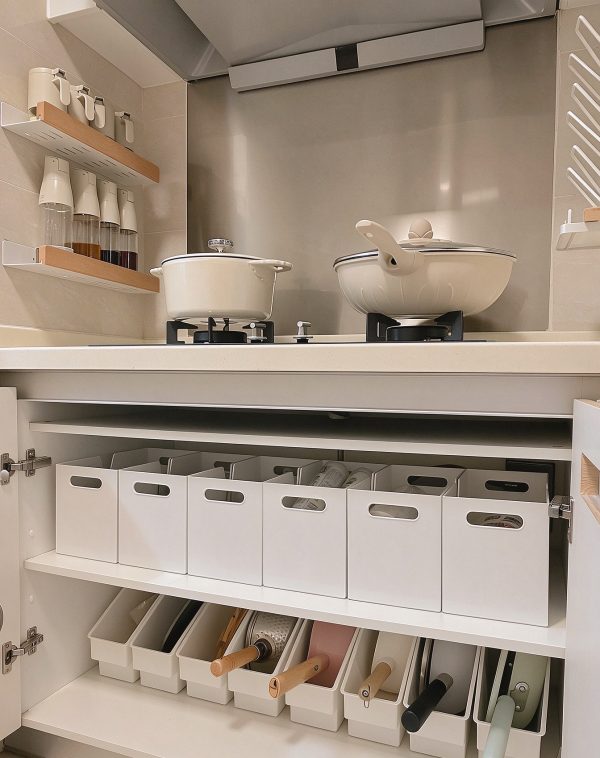
Deep drawers are very valuable in a small kitchen. They can hold larger cookware, lids, baking trays, and frequently used tools without making the whole kitchen look messy.
The best way to organize deep drawers is to use dividers or storage boxes. This keeps items standing upright and prevents them from stacking into a chaotic pile.
You can separate your drawer contents into these groups:
Frying pans and saucepans
Lids of different sizes
Baking trays and roasting pans
Frequently used cooking tools
Specialized cookware for holidays or weekends
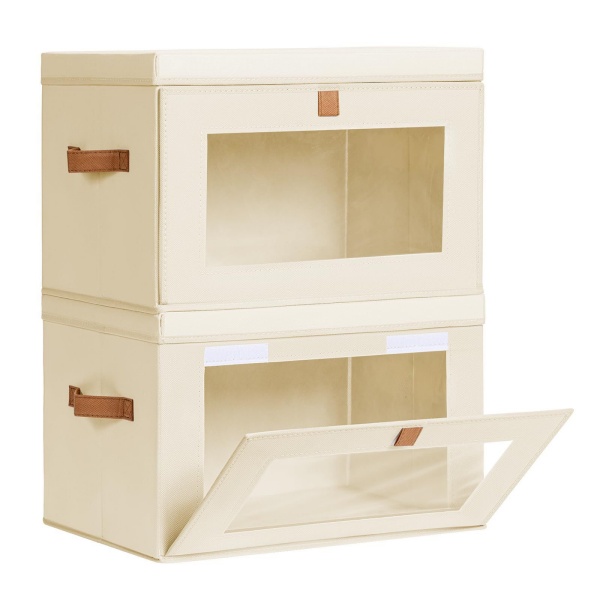
White storage boxes look clean and make it easier to see everything at a glance. They also help protect pans from scratches.
2. Add a Tall Storage Cabinet for Less Frequently Used Items
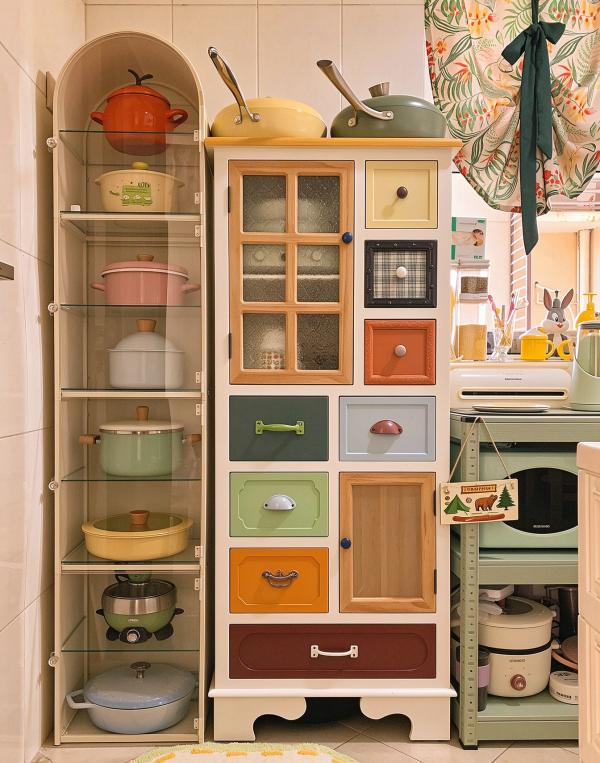
A tall storage cabinet is a good solution if you have many pots, baking dishes, or small appliances but limited counter space. It turns scattered items into one organized storage area.
When organizing a tall cabinet, place items according to how often you use them:
Everyday plates and bowls at medium height
Large pots and pans on lower shelves
Baking dishes and holidayware on higher shelves
Small appliances in easy-to-reach positions
This method is especially useful for families who cook often. It protects expensive cookware, keeps dust away, and makes the kitchen look more orderly.
3. Organize a Narrow Cabinet by Category
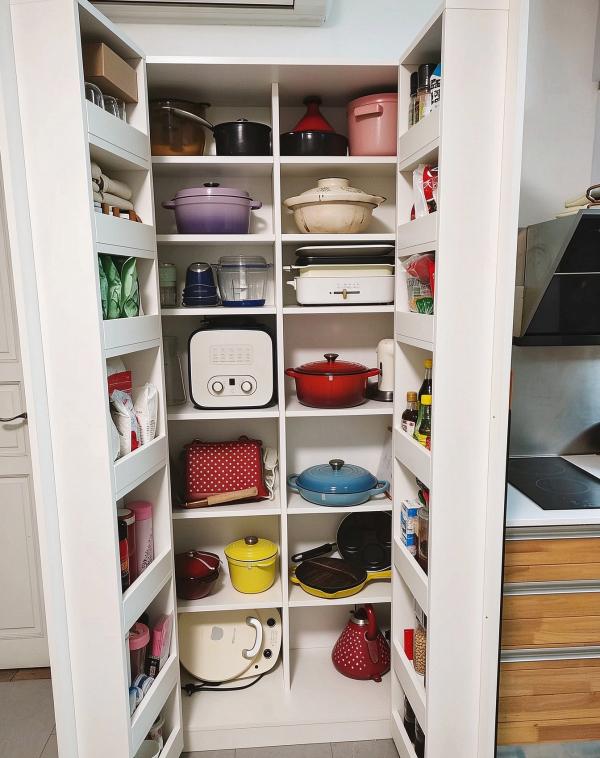
Narrow cabinets are often wasted because they are difficult to arrange properly. However, with simple grouping, they can become very efficient storage spaces for pots, drinks, canned food, and small ingredients.
Start by sorting items into clear categories:
Pots, pans, and lids
Coffee, tea, and drinks
Canned food and preserved ingredients
Cooking wine and sauces
Small kitchen gadgets
Once the categories are clear, place each group on one or two shelves. Do not mix pots with snacks or cleaning supplies, because this will make the cabinet messy again very quickly.
4. Combine Pantry Storage with Daily Cooking Zones
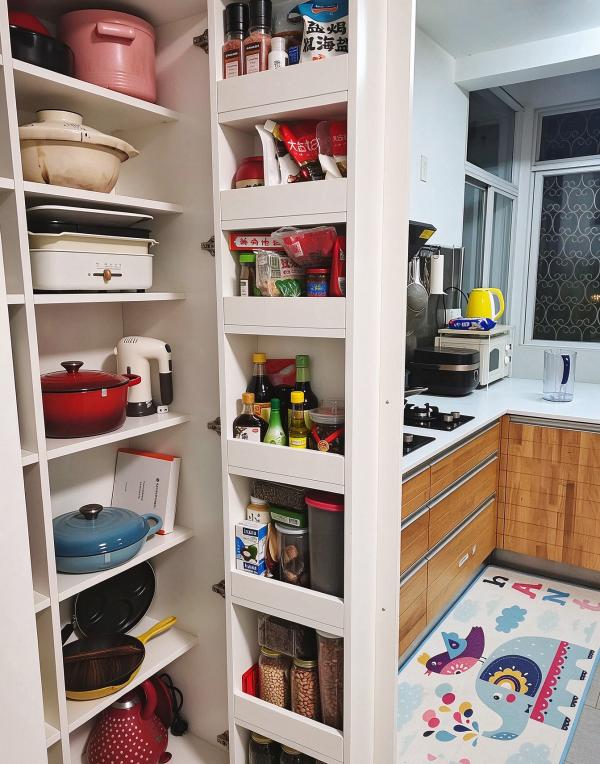
The most practical small kitchen systems connect pantry storage with daily cooking areas. When spices, cooking tools, pots, and food ingredients are close to each other, cooking becomes much faster.
Keep these items near your main cooking zone:
Frequently used spices and sauces
Cooking oil and vinegar
Salt, sugar, and baking powder
Small tools such as scissors and spatulas
Frequently used pots and pans
Place less frequently used items at the back or on higher shelves. This keeps the front area clean and makes the whole kitchen feel more organized.
Conclusion
Small kitchen storage is not about buying as many organizers as possible. It is about creating a simple system that matches your daily cooking habits.
Use deep drawers for cookware, tall cabinets for extra items, narrow cabinets for categories, and pantry shelves for daily ingredients. Once each item has its own place, the kitchen will stay tidy with much less effort.
These ideas are practical for compact kitchens, rental apartments, and families who want a more efficient cooking space.

Leave a Comment